Hiking Sock Materials Compared: Merino Wool Vs Synthetic Blends
Author:Alina
|
Released:February 25, 2026
The material of your hiking socks is more about comfort than most hikers are aware. The misplaced cloth is causing blisters, cold feet, and wretched miles. The correct decision will make you spend the day in a good mood.
The hiking sock market is dominated by merino wool and synthetic blends. Both have true merits based on your circumstances, tastes, and financial resources.
Why Hikers Love Merino Wool Socks
1. Soft and Comfortable (No Itch)
Merino wool is the wool of Merino sheep that are reared to produce ultra-fine fibers. The merino fibers are between 17 and 22 microns in diameter and softer to the touch on the skin compared to traditional wool, which is scratchy. This thinness means that merino bends instead of poking, and the itch that had kept the previous generations away from wool socks is removed.
2. Excellent Temperature Control
The area where merino is very strong is temperature control. Air pockets are trapped in the fiber structure, which insulates in cold weather, but radiates heat when temperatures increase.
You will keep your feet warm on morning ascents and cool on hot afternoon ascents. Textile Research Journal affirms that merino is superior to synthetics in thermal control at different levels of activity [1].
3. Natural Odor Resistance
Merino has a significant practical benefit due to odor resistance. The surface of the fibers is naturally resistant to bacteria, causing foot odor. A significant portion of thru-hikers use their merino socks for a week without any foul odors. Synthetic socks usually need to be washed after one or two days in order to be bearable in the confines of a room.
4. Effective Moisture Management
Control of moisture is not the same thing in merino as it is in synthetics. Wool fibers hold up to half of their weight in moisture before it gets wet. This uptake occurs within the fiber as opposed to the surface, which will keep your skin drier as you moderately sweat.
These properties have gained a following of brands such as Darn Tough, Smartwool, and Icebreaker.
The Case For Synthetic Hiking Socks
1. Faster Moisture Wicking During Intense Activity
Synthetic hiking socks are made of materials such as nylon, polyester, and acrylic that are designed to be used in athletics. These are fabricated materials that will draw water to the surface where it is set free through evaporation.
In the case of heavy activity where one is sweating intensely, the synthetics tend to carry the moisture away more quickly than merino can take it in.
2. Greater Durability and Better Value
Synthetics are more popular in terms of durability. High-wear parts of the socks, such as heels and toes, are reinforced with nylon, which increases the sock's life considerably.
Pure merino is more prone to wear, and as such, most quality merino socks will have nylon mixed in at areas of stress. Synthetic products offer more bang per buck to budget-conscious hikers.
3. Faster Drying on Multi-Day Trips
On multi-day trips, the time spent drying is important. Artificial socks dried after being washed overnight in average weather. Merino is slower to evaporate absorbed water, and may take a day to dry out. Wet socks imply blisters, and it is necessary to dry them as quickly as possible when you cannot carry many pairs.
4. More Affordable for Building a Rotation
Synthetics have a significant advantage in price. Good synthetic hiking socks are between eight and fifteen dollars a pair. Similar merino socks cost between twenty and thirty.
This is a difference that accumulates fast within the rotation of several pairs created by hikers. American Hiking Society suggests that one should have at least three pairs of hiking socks of any material [2].
Matching Sock Material To Your Climate
Merino wool is obviously preferred in cold-weather hiking. The natural insulation also keeps toes warm as a rest break when the feet are chilled by synthetic wicking. Merino is overwhelmingly the favorite of winter hikers and mountaineers in freezing temperatures. The warmth-when-wet feature offers an essential safety margin in case boots are wetened when crossing a stream or post-holing through snow.
The hot weather brings about a more intense competition. During peak exercise, synthetics help sweat to cool the body more quickly, whereas during non-peak exercise, merino helps maintain a more stable body temperature. Extremely thin synthetic socks are popular among desert hikers who have to cope with the heat. The dampness of jungles is conducive to the use of synthetics that dry quickly after unavoidable wettings.
Both materials are appropriate in moderate conditions of three seasons. When the extreme temperatures and excessive moisture are not prevalent, then personal preference plays the greatest role. Test both with similar increases and monitor the way your feet feel after lengthy days.
Why Most Quality Socks Blend Both Materials
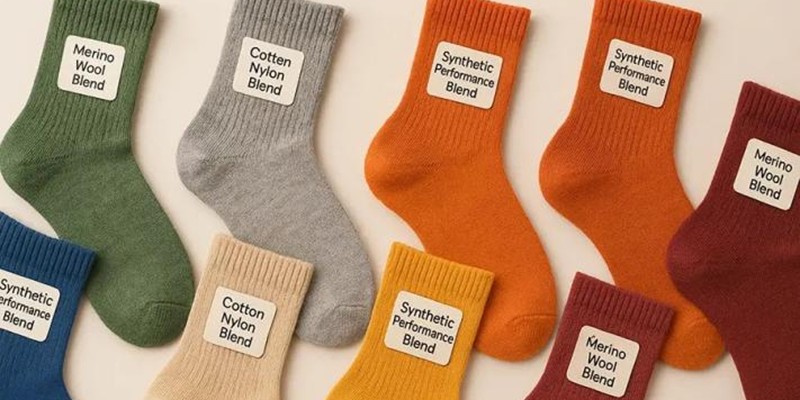
Look at the label of good hiking socks, and you will discover a mixture of materials. Darn Tough is made with merino and nylon, and spandex to be durable and stretchy. Similar blends are used at Smartwool. Even the synthetic socks sold as such may contain little percentages of wool to regulate temperature.
An average high-performance blend would comprise 60 percent merino, 37 percent nylon, and 3 percent spandex. This blend will provide merino comfort and odor protection and nylon durability, and spandex fit. Testing by REI revealed that properly blended mixtures can perform better than pure versions of either material [3].
Choosing The Right Socks for Your Feet
Start with merino blends, provided you can afford the higher price. Most hikers find the comfort, odor resistance, and temperature regulation to be worth the price. Darn Tough have a lifetime guarantee, which makes their merino socks less expensive in the long-term than disposable low-end alternatives.
Synthetics are a good choice when you mostly hike in hot weather, require quick drying on extended hikes or you just want to create a larger sock collection with a limited budget. Cotton must be avoided at all costs, irrespective of other tastes. Cotton is wet, captures moisture, and results in blisters consistently. Your feet should be treated better in every hike.
References
[1] Thermal Properties of Wool and Synthetic Fibers - Textile Research Journal - https://journals.sagepub.com/home/trj
[2] Hiking Gear Essentials - American Hiking Society - https://americanhiking.org/hiking-for-beginners-essential-guide/
[3] How To Choose Hiking Socks - REI Expert Advice - https://www.rei.com/learn/expert-advice/socks.html
Related Posts
Outdoor Gear
Water Filter vs Purifier for Hiking: Which One Do You Actually Need

Guides and Tips
How To Choose The Perfect Backpack For Long Hikes Without Pain Or Regret

Activities
How To Make Hiking More Enjoyable For Beginners In 10 Simple Ways

Guides and Tips
Best Lightweight Hiking Gear For Long-Distance Trails With 17 Smart Picks That Stay Comfortable

Activities
Top Winter Hiking Trails in Canada: 11 Scenic Routes to Try This Season

Activities